Devotion
How to Bless Your Home and Use Holy Water
Household blessings from the Book of Blessings, the right use of holy water at home, the Epiphany chalk blessing, blessing religious articles, and keeping a prayer corner.
6 steps · About 15 minutes
Sacramentals are sacred signs instituted by the Church — blessings, holy water, blessed objects — which prepare us to receive grace and sanctify the ordinary occasions of life. Among them the Catechism gives first place to blessings, and it notes that while some blessings are reserved to the ordained, lay people may preside over certain of them, above all parents over their children and households. The Church's Book of Blessings therefore gives an order for the blessing of a home, and Catholic tradition surrounds the home with holy water at the door, the Epiphany inscription over it, a crucifix and an image of Our Lady on the wall, and a corner where the family prays. None of these are magic; all of them are the faith made visible where you live.
What you need
- Holy water, taken from the parish font or dispenser in a small bottle
- A crucifix and, if you wish, an image of Our Lady or a saint for the wall
- A copy of the household blessings — the Book of Blessings, or the USCCB's Catholic Household Blessings and Prayers
- For Epiphany, blessed chalk from the parish, or ordinary chalk you ask the priest to bless
When to pray it
A home blessing by a priest or deacon is usually asked for when a family moves in, and many parishes bless homes during the Easter season; the Epiphany blessing is done in the days around 6 January. Holy water is used daily, at the door and at bedtime.
Steps
Step 1: Ask the parish for a house blessing
Phone or visit the parish office and ask whether a priest or deacon could come to bless your home; most are glad to, and some parishes announce home blessings during the Easter season or around Epiphany. The Book of Blessings provides the order: a short greeting, a reading from Scripture (often Luke 19, Zacchaeus receiving Jesus into his house, or Luke 10, the disciples' greeting of peace), intercessions, the prayer of blessing asking that God's peace and protection rest on the house and all who live in it, and the sprinkling of the rooms with holy water. Have the family present, clear a table for a crucifix and candle, and walk with the minister from room to room; the blessing is of the household, not only of the walls.
Step 2: Bless the home yourself when no minister can come
The Book of Blessings allows a lay person, and especially a parent, to lead a household blessing with the shorter form it provides. Gather the family, make the Sign of the Cross, and read a short passage of Scripture, such as Luke 10:5-9 ('Into whatever house you enter, first say, Peace to this household'). Then pray in your own words or with the book — that Christ may be a guest in this home, that those who live here may be kept in his peace, and that all who visit may find him here — and end with the . Sprinkle each room with holy water, saying the Sign of the Cross. A lay person does not use the priest's blessing formula or gestures; the prayer is made with hands joined, and it is still a true blessing.
Step 3: Keep and use holy water at home
Bring holy water home in a clean bottle and keep some in a small font by the front door; the rest can be stored in the bottle. Use it as the Church uses it at the door of every church: bless yourself with it as you come and go, saying 'In the name of the Father, and of the Son, and of the Holy Spirit,' as a renewal of your Baptism. Parents may trace the cross with holy water on their children's foreheads at bedtime with the words 'May God bless you and keep you.' Holy water may be sprinkled in a sickroom, on a new bed or car, or around the house in times of fear, always with a prayer — an , or the in the face of temptation. It is a reminder of Baptism and a sign of God's protection, not a substance with power of its own.
Step 4: Make the Epiphany blessing of the door
On or near the Solemnity of the Epiphany, families mark the lintel of the main door with blessed chalk, writing the year with the initials of the traditional names of the Magi — Caspar, Melchior and Balthasar — between crosses: for example 20 + C + M + B + 26. The letters are also read as the Latin Christus mansionem benedicat, 'May Christ bless this house.' Gather at the door, make the Sign of the Cross, read the Gospel of the Magi (Matthew 2:1-12), and pray that all who enter this home during the year may find Christ living here and may seek and serve him in everyone they meet; then write the inscription and sprinkle the door with holy water, and close with the . The chalk is blessed in many parishes at the Epiphany Masses; ask the priest to bless a box if it is not.
Step 5: Have religious articles blessed
Crucifixes, rosaries, medals, scapulars, statues and images become sacramentals when blessed, and the blessing is reserved to a priest or deacon. Bring the object to the sacristy after Mass and ask; the blessing is brief, and a deacon may give it. A blessed object is then treated with reverence: kept in a place of honour, not used as jewellery of no meaning, and when it is broken beyond repair, burned or buried rather than thrown away. The Directory on Popular Piety and the Liturgy reminds us that such objects are aids to prayer and signs of faith, and warns against treating them as charms; a blessed medal worn by someone who never prays is only a medal.
Step 6: Keep a prayer corner
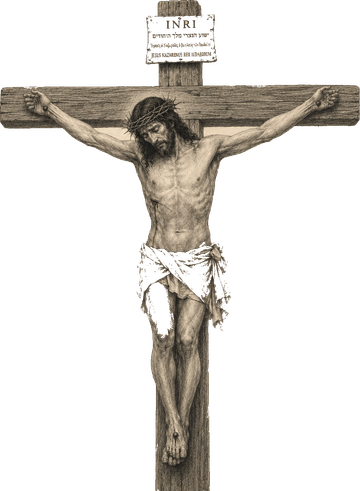
Set aside one place in the home for prayer — a shelf, a small table, the corner of a room — with a crucifix, an image of Our Lady, a Bible, and if you like a candle and the holy water font. This is the home's 'little oratory,' the place where the Rosary is prayed, where the Advent wreath and the crib stand in their seasons, where the family gathers for grace on feast days and for the at bedtime. Keep it simple, keep it clean, and above all use it: a home is blessed once by the priest, but it is sanctified daily by the people who pray in it. The guide 'How to Begin and End the Day with Prayer' gives a simple rule to pray there.
Tips
- Holy water is taken, not bought: parishes keep a dispenser or will fill a bottle from the font, especially after the Easter Vigil, when the baptismal water has just been blessed.
- When holy water is old or a blessed object is beyond use, pour the water onto the earth and burn or bury the object; blessed things are not put in the rubbish.
- A blessing by a lay person is a real blessing, but it is not the same rite as a priest's. Invite the priest for the house; bless your children yourself every night.
- Keep the prayer corner simple and used. One crucifix in front of which the family actually prays is worth more than a wall of unnoticed images.