Devotion
How to Keep Friday Penance Throughout the Year
Every Friday of the year, not only in Lent, is a day of penance in memory of the Lord's Passion: what the Church's law asks, what the bishops of the United States allow in place of abstinence, and how to make it a habit.
6 steps · About 10 minutes
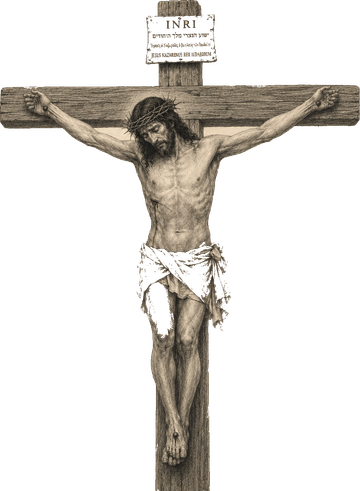
In the apostolic constitution Paenitemini of 1966, Paul VI renewed the Church's ancient discipline of penance and kept Friday as its weekly day, because Friday is the day Christ died. The Code of Canon Law repeats it: all Fridays of the year, and the season of Lent, are penitential days and times in the universal Church, and on Fridays abstinence from meat is to be observed unless a solemnity falls that day; the conference of bishops may substitute other forms of penance. In the United States the bishops did so in 1966: outside Lent, Catholics may replace Friday abstinence with another act of penance or charity, while the bishops asked that abstinence keep first place and hoped it would be freely kept. What no one abolished is the Friday itself. It remains, every week, a day on which a Catholic does something in memory of the Cross.
What you need
- A clear decision about your Friday practice — abstinence from meat, or a named substitute
- A reminder: a note in the calendar, an alarm on Thursday night, or a family custom
- A crucifix to pray before, or the Stations of the Cross when the parish offers them
When to pray it
Every Friday of the year, except a Friday on which a solemnity falls (Christmas, the Sacred Heart, and the others of the calendar), when the penance is lifted. In Lent the discipline is stricter and abstinence from meat is obligatory for all from age fourteen.
Steps
Step 1: Understand that every Friday is penitential
Canon 1250 declares all Fridays of the whole year, together with Lent, to be days and times of penance in the universal Church, and canon 1251 says that abstinence from meat is to be observed on all Fridays unless a solemnity falls on that day. Paenitemini explains why: penance is part of the Gospel, a sharing in the sufferings of Christ, and the Church binds it to Friday so that the week itself keeps the memory of the Passion. The obligation to do penance on Fridays is real and is not confined to Lent; what the bishops of the United States changed in 1966 was the form, allowing another act of penance or charity to replace abstinence outside Lent, not the day.
Step 2: Choose abstinence or another penance
The Church's own preference is abstinence from meat — flesh meat of warm-blooded animals; fish, eggs and dairy are permitted — and the United States bishops, while permitting substitution, gave abstinence 'first place' and asked that it be kept especially in memory of the Passion. Many Catholics simply keep it every Friday of the year, which needs no decision after the first. If you substitute, the alternative should be a real act of penance or charity: giving up something you would otherwise enjoy that day, fasting from a meal, an hour given to someone who needs it, or a sum given to the poor. Whatever it is, it should be something you would notice if you forgot.
Step 3: Fix your Friday practice
Decide your Friday penance concretely and, if you have a family, decide it together: meatless Friday suppers are the classic family form, and children keep them easily when they are simply how Friday is. Write the decision down, tell it to your spouse or a friend, and set a reminder for Thursday evening so that the shopping and the plans for Friday take it into account. Join a prayer to the penance if you can — the on Friday morning, a decade of the Sorrowful Mysteries, or the Stations of the Cross when the parish prays them, so that the going-without has a face: it is done for him who went without everything on that day.
Step 4: Let the penance become charity
Paenitemini teaches that penance has three classic forms — prayer, fasting and works of charity — and the United States bishops explicitly named works of charity and mercy as fitting Friday substitutes for abstinence. So a Friday penance may look outward: visiting someone sick or lonely, an hour of volunteering, a gift to the poor equal to what a meat meal would have cost, forgiving a wrong, or writing the letter you have been putting off. The measure is the same as for fasting: it should cost something and be done for Christ. Best of all is to combine them, keeping abstinence and giving its saving away, which is the ancient link between fasting and almsgiving.
Step 5: Keep the Fridays of Lent differently
In Lent the substitution does not apply. All Catholics from age fourteen are bound to abstain from meat on Ash Wednesday and every Friday of Lent, and those aged eighteen to fifty-nine to fast — one full meal, two smaller ones that together do not equal it, no eating between meals — on Ash Wednesday and Good Friday; the guide 'How to Fast and Abstain During Lent' gives the detail. Lenten Fridays are also the parish's day for the Stations of the Cross and, in many places, for fish suppers and confessions. Let the whole year's Friday practice be shaped by Lent's: what you keep for six Fridays with the whole Church, you can keep more lightly for the other forty-six.
Step 6: Make it a habit and recognise the exceptions
A Friday practice becomes easy only when it is unquestioned, so keep it for a year without renegotiating it each week; after that it will keep itself. Know the exceptions: on a Friday on which a solemnity falls — Christmas Day, the Solemnity of the Sacred Heart, Saints Peter and Paul, and the other solemnities of the calendar, including a parish's patronal solemnity — the penance is lifted by the law itself, and the day is kept as a feast. The sick, the elderly, the pregnant and those who must eat what they are given are not bound to abstinence. Everyone else is bound to Friday, and the reward of keeping it is a week that never quite forgets the Cross, and a small, steady share in the Lord's own Friday.
Tips
- Decide once, then keep it: a Friday practice chosen fresh each week is the one most easily dropped.
- Abstinence from meat is the Church's first preference and the simplest to keep, and it links you to Catholics across the world and across the centuries.
- If you substitute, substitute honestly. Skipping dessert you did not want is not penance; giving up something felt, or doing something costly for someone, is.
- Friday penance is a discipline of love, not a test. Missing a Friday outside Lent is not a sin; it is a Friday to make up for by beginning again the next.