Adoration
How to Make an Act of Spiritual Communion
Eucharistic Adoration · 6 steps
Uniting oneself to Christ in the Eucharist by desire when unable to receive him sacramentally: what spiritual communion is, when it applies, and how to make it with the traditional act.
6 steps · About 5 minutes
Spiritual communion is an ardent desire to receive Jesus in the Eucharist, made when one cannot receive him sacramentally, together with an act of love as though one had received him. Saint John Paul II, in Ecclesia de Eucharistia, recalled that the practice grew out of the constant desire for the Eucharist that the saints cultivated, and quoted Saint Teresa of Jesus, who taught that when one cannot receive at Mass one can make a spiritual communion and receive great grace from the Lord's love. Saint Alphonsus Liguori wrote the short act most Catholics use. It is a prayer for the sick, the homebound, the traveller, the person who arrives at a Mass already begun, and anyone who is not able to receive.
What you need
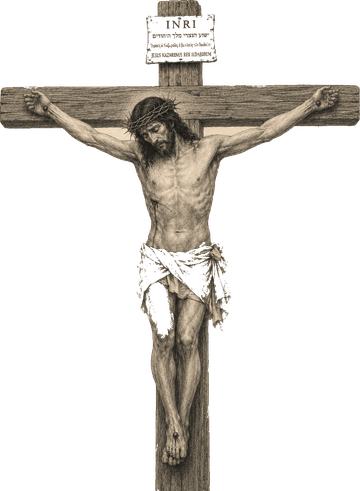
- A quiet moment; before a crucifix, during a Mass watched or attended, or at a visit to the Blessed Sacrament
- The traditional Act of Spiritual Communion, or your own words
- A real desire for the Eucharist
When to pray it
Whenever you attend Mass without receiving; when you are ill or far from a church; when you follow a Mass by broadcast; during a visit to the Blessed Sacrament; and any time in the day when you long for him.
Steps
Step 1: Understand what spiritual communion is
Spiritual communion is not a substitute ritual but an act of the heart: faith in the Real Presence, love for the Lord who gives himself in the Eucharist, and the desire to receive him, expressed to him directly. The Church has always taught that the effects of the sacrament can be received by desire when the sacrament itself cannot be had; the Council of Trent spoke of those who eat the Eucharist spiritually. It costs nothing but attention and love.
Step 2: Know when to make it
Make an when illness, distance, age or duty keeps you from Mass; when you are at Mass but cannot receive, because you have not kept the one-hour fast, have arrived late, are not Catholic, or are conscious of grave sin and have not yet confessed; when you follow Mass on television or online; and at any visit to the Blessed Sacrament. It is not to be made in place of Mass when Mass is possible.
Step 3: Prepare your heart
Pause, make the , and turn to him. Make an in his presence in the Eucharist, wherever the nearest tabernacle is: 'Jesus, I believe you are truly present in the Blessed Sacrament.' Make an act of sorrow for your sins, and if you are conscious of a mortal sin, an act of perfect contrition with the intention of confessing as soon as you can. Then let the desire grow: you want him, and you want him now.
Step 4: Pray the Act of Spiritual Communion
Pray slowly the act of Saint Alphonsus Liguori: 'My Jesus, I believe that you are present in the Most Holy Sacrament. I love you above all things, and I desire to receive you into my soul. Since I cannot at this moment receive you sacramentally, come at least spiritually into my heart. I embrace you as if you were already there, and unite myself wholly to you. Never permit me to be separated from you. Amen.' If you are at a Mass, pray it at the moment the others receive.
Step 5: Continue with thanksgiving
Then behave as though you had received: stay a few minutes in silence, thank him, offer yourself, ask for what you need, and pray an or the . Saint Teresa told her sisters to make their thanksgiving after a spiritual communion as carefully as after a sacramental one, because the Lord's love, she said, is imprinted in the soul either way.
Step 6: Return to sacramental Communion as soon as you can
Spiritual communion should lead back to the altar. If sin keeps you from receiving, go to confession. If distance or illness keeps you, ask the parish about Communion brought to the home, which priests, deacons and extraordinary ministers do gladly. If it is the Sunday obligation you cannot fulfil, ask your pastor about it; the Church dispenses those who truly cannot attend. Let the desire you have expressed be answered.
Tips
- Spiritual communion is not a second-class Communion; the grace given is real, measured by the desire and love with which it is made.
- It does not remove the need for confession if you are in mortal sin, but it is exactly the prayer to make while you wait to confess.
- Make it several times a day if you like; the saints did.
- It never replaces Mass when Mass is possible. Sunday Mass remains an obligation for those who are able to attend.