Liturgy of the Hours
How to Pray the Liturgy of the Hours
Morning, Evening and Night Prayer with a breviary or an approved app: what the Hours are, how the four-week psalter works, and the order of each Hour.
8 steps · About 20 minutes
The Liturgy of the Hours, also called the Divine Office, is the public prayer of the Church that sanctifies the whole course of the day and night with psalms, Scripture and intercession. Bishops, priests, deacons and religious are bound to it, but the Second Vatican Council warmly encouraged the laity to pray it too, alone or with others, and above all Morning and Evening Prayer, the two 'hinges' of the day. When you pray it you are not saying private prayers: you are joining the prayer that the whole Church, with Christ its Head, offers to the Father at every hour.
What you need
- A breviary — the four-volume Liturgy of the Hours, or the one-volume Christian Prayer, which contains Morning, Evening and Night Prayer — or an approved app or website that lays out the day's texts
- A guide (ordo) or the app's calendar to tell you today's week of the psalter and any feast
- About fifteen minutes for Morning or Evening Prayer, five for Night Prayer
- If praying with others, one person to lead and a way to alternate the psalm verses
When to pray it
Morning Prayer soon after rising, Evening Prayer at the end of the working day, Night Prayer just before sleep. If you can pray only one Hour, choose Morning or Evening Prayer; the Council names them the principal Hours.
Steps
Step 1: Know the Hours and what each is for
The full Office has five parts. Morning Prayer (Lauds) consecrates the day as it begins and recalls the Resurrection; Evening Prayer (Vespers) gives thanks for the day and recalls the evening sacrifice; these two are the hinges, and lay people who pray the Office usually pray these. The Office of Readings, with its longer Scripture and Church Fathers, may be prayed at any hour. Daytime Prayer (mid-morning, midday or mid-afternoon) is brief, and Night Prayer (Compline) is the short prayer before sleep. Each Hour is built from a hymn, psalms with antiphons, a reading, a responsory, a Gospel canticle at the major Hours, intercessions and a concluding prayer.
Step 2: Set up your breviary or app
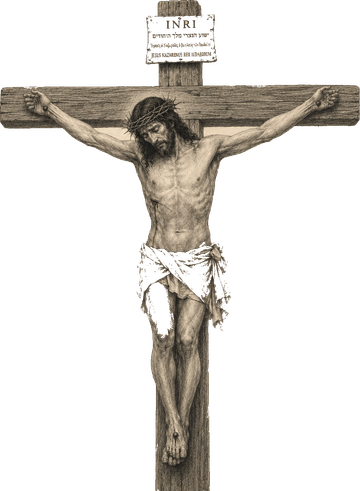
In a printed breviary, find the four-week Psalter (the largest section), the Proper of Seasons (Advent, Christmas, Lent, Easter), the Proper of Saints and the Commons, and the Ordinary, which gives the fixed structure of each Hour. Place a ribbon in each of the first three. An app does this for you: open today's date and choose the Hour. Check the day's guide for the week of the psalter and whether a feast replaces the ordinary texts. Choose a quiet place and, if possible, face a crucifix or icon.
Step 3: Find your place in the four-week psalter
The psalms are spread over a four-week cycle, Week I to Week IV. In Ordinary Time the week of the psalter matches the Sunday: the first, fifth, ninth and thirteenth Sundays (and so on) begin Week I, the second, sixth and tenth begin Week II, and likewise for Weeks III and IV; the First Sunday of Advent, the First Sunday of Lent and Easter Sunday always begin Week I. Sundays and solemnities have Evening Prayer I on the evening before. If in doubt, the ordo or the app tells you; in a printed breviary the week is printed at the head of each page.
Step 4: Morning Prayer step by step
If this is the first Hour of your day, begin with the Invitatory: 'Lord, open my lips. R. And my mouth will proclaim your praise,' then Psalm 95 (or 100, 67 or 24) with its antiphon repeated after each stanza. Otherwise begin 'God, come to my assistance. R. Lord, make haste to help me,' then the , and 'Alleluia' outside Lent. Sing or say the hymn. Pray the first psalm with its antiphon before and after and the at the end, then the Old Testament canticle, then the second psalm, each in the same way. Read the short Scripture reading and pause. Say the responsory line by line. Stand and make the for the , the , with its antiphon. Pray the intercessions, answering each with the given response, then the and the concluding prayer. If no priest or deacon is present, end: 'May the Lord bless us, protect us from all evil and bring us to everlasting life. R. Amen.'
Step 5: Evening Prayer step by step
Begin 'God, come to my assistance. R. Lord, make haste to help me,' the and 'Alleluia' outside Lent. The hymn follows. Pray two psalms and a New Testament canticle, each framed by its antiphon and closed with the . Read the short reading, pause in silence, and say the responsory. Stand and make the for the , the Canticle of Mary, with its antiphon; this is the heart of Evening Prayer. The intercessions at Evening Prayer always end with a petition for the dead. Then the , the concluding prayer and the blessing: 'May the Lord bless us, protect us from all evil and bring us to everlasting life. R. Amen.'
Step 6: Night Prayer before sleep
Night Prayer is short and changes little from week to week, so it is easily learned by heart. Begin 'God, come to my assistance. R. Lord, make haste to help me,' with the . Make a brief examination of conscience in silence, and pray the or another act of contrition. Sing or say the hymn, then the psalm (or two) for the day of the week with its antiphon. Read the short reading, and say the responsory: 'Into your hands, Lord, I commend my spirit.' Make the for the , the , with its antiphon 'Protect us, Lord, as we stay awake; watch over us as we sleep, that awake we may keep watch with Christ, and asleep rest in his peace.' Pray the concluding prayer, and end: 'May the all-powerful Lord grant us a restful night and a peaceful death. R. Amen.' Finish with a Marian antiphon — the , or the in Easter Time.
Step 7: Feasts and seasons
In Advent, Christmas, Lent and Easter the Proper of Seasons supplies antiphons, readings, responsories and prayers that replace those of the psalter, while the psalms themselves usually stay. On a solemnity or feast, the Proper of Saints or the Commons supplies almost everything, and the psalms are those of Sunday Week I; the is added to the Office of Readings on Sundays outside Lent, solemnities and feasts. Memorials of saints normally keep the weekday psalms and take only the concluding prayer, and perhaps the antiphons of the Gospel canticles, from the saint. Your app or ordo marks all of this; when in doubt, pray the weekday and do not worry.
Step 8: Praying the Hours with others
The Office is by nature communal, and it is simple to pray together. One person leads the opening versicle, the intercessions and the concluding prayer; the group divides into two sides that alternate the stanzas of each psalm, or a cantor sings the verses and all answer the antiphon. All stand for the opening, the hymn, the Gospel canticle, the intercessions and the concluding prayer, and sit for the psalms and the reading. In a family, a single psalm, the reading and the Gospel canticle already make a true celebration of the Hour. Sacrosanctum Concilium asked pastors to celebrate the principal Hours, especially Vespers, in church on Sundays and greater feasts, and encouraged the laity to pray the Office with priests, among themselves, or alone.
Tips
- An app removes the ribbons and the page-flipping. Begin there, and take up a printed breviary when you know the shape of the Hours by heart.
- Pray the psalms slowly and pause between them. The Church asks that the psalmody be prayed with the mind attentive to the words, and gives an antiphon to each psalm to show how the Church reads it in Christ.
- Make the Sign of the Cross at the opening words of the Benedictus, the Magnificat and the Nunc Dimittis, as the rubrics direct, and stand for these Gospel canticles.
- Many parishes sing Evening Prayer on Sundays and during Advent and Lent; Sacrosanctum Concilium specifically asked for this. Join them if you can.