Devotion
How to Pray the Stations of the Cross
Catholic devotion · 12 steps
Walk with Christ from Pilate's judgment seat to the tomb: how to open, what to say and do at each of the fourteen stations, and how to close.
12 steps · About 30 minutes
The Way of the Cross (Via Crucis) follows Jesus through fourteen moments of his Passion, from his condemnation to his burial. It grew out of the pilgrims who traced his path along the Via Dolorosa in Jerusalem, and was spread through the Franciscans so that every parish church could become a place of pilgrimage. It is prayed by moving from station to station, pausing at each to adore Christ, to consider what he suffered for us, and to pray. The Directory on Popular Piety and the Liturgy calls it a devotion in deep harmony with the liturgy of Lent and Good Friday.
What you need
- The fourteen stations mounted in a church, or a set of images or a booklet at home
- A set of meditations — many parishes use those of Saint Alphonsus Liguori, or a Scriptural Way of the Cross
- About thirty unhurried minutes
- Optionally the verses of the Stabat Mater, sung while moving between stations
When to pray it
Any day, but above all on the Fridays of Lent, when most parishes pray the Stations publicly, and on Good Friday. Many pray them every Friday of the year in memory of the Lord's death.
Steps
Step 1: Choose your meditations and find the stations
Decide which set of meditations you will use: a booklet from the parish, the meditations of Saint Alphonsus Liguori, or a Scriptural Way of the Cross. In a church, the fourteen stations are usually numbered plaques or images along the side walls; begin at the first, near the sanctuary on one side, and follow them around. At home, set out the images or simply hold the booklet and make the journey in your imagination.
Step 2: Open with the Sign of the Cross and an act of contrition
Standing before the altar or the first station, make the . Ask for the grace to walk with Jesus in his sufferings and to be truly sorry for the sins that caused them. Many begin with the , or with a short prayer such as: 'Lord Jesus, you walked this way for me; help me to follow you to Calvary with love and sorrow.' Name any intention you are bringing.
Step 3: Learn the pattern you will repeat at every station
Each station has the same shape. The leader announces it: 'The First Station: Jesus is condemned to death.' All genuflect or bow and say the versicle and response: V. We adore you, O Christ, and we bless you. R. Because by your holy Cross you have redeemed the world. Then the meditation is read, followed by a moment of silence. Pray the , the and the , and, while moving to the next station, sing a verse of the Stabat Mater or keep silence. The Directory on Popular Piety notes that this movement from station to station is part of the devotion itself: a pilgrimage in miniature.
Step 4: Stations 1 to 3: condemned, burdened, fallen
The First Station: Jesus is condemned to death. Pilate washes his hands and hands over the innocent Lamb; ask for the courage never to condemn the innocent by silence or cowardice. The Second Station: Jesus takes up his Cross. He receives it freely, for love of us; offer him the crosses you carry today. The Third Station: Jesus falls the first time. The weight of our sins brings him down; ask for the grace to rise after your own falls. At each: V. We adore you, O Christ, and we bless you. R. Because by your holy Cross you have redeemed the world. Then the , and .
Step 5: Stations 4 to 6: his Mother, Simon, Veronica
The Fourth Station: Jesus meets his Mother. Mary's sorrow is the sword Simeon foretold; ask her to stand with you at your own crosses. The Fifth Station: Simon of Cyrene helps Jesus carry the Cross. Simon was pressed into service and became a disciple; ask for a willing heart when you are asked to help. The Sixth Station: Veronica wipes the face of Jesus. A small act of compassion, remembered for ever; ask to see the face of Christ in the suffering. At each: V. We adore you, O Christ, and we bless you. R. Because by your holy Cross you have redeemed the world. Then the , and .
Step 6: Stations 7 to 9: the second fall, the women, the third fall
The Seventh Station: Jesus falls the second time. Exhausted, he gets up again; ask for perseverance in the sins you keep confessing. The Eighth Station: Jesus meets the women of Jerusalem. 'Do not weep for me; weep for yourselves and for your children' (Luke 23:28); let your sorrow be for sin, not sentiment. The Ninth Station: Jesus falls the third time. Almost at Calvary, he falls hardest of all; ask for the grace never to despair, however often you fall. At each: V. We adore you, O Christ, and we bless you. R. Because by your holy Cross you have redeemed the world. Then the , and .
Step 7: Stations 10 to 12: stripped, nailed, and dying
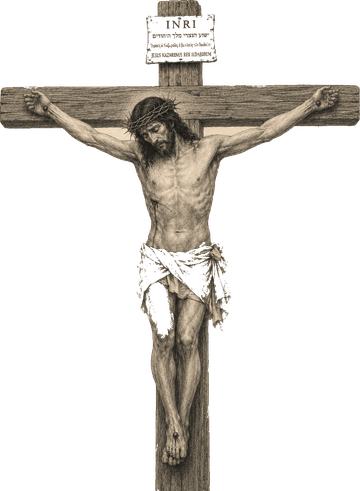
The Tenth Station: Jesus is stripped of his garments. He is left with nothing; ask for detachment from what you cling to. The Eleventh Station: Jesus is nailed to the Cross. 'Father, forgive them, for they know not what they do' (Luke 23:34); ask for the grace to forgive as he forgave. The Twelfth Station: Jesus dies on the Cross. Here all kneel. Keep a long silence; then, if you wish, pray the or simply say, 'Jesus, I love you.' At each: V. We adore you, O Christ, and we bless you. R. Because by your holy Cross you have redeemed the world. Then the , and .
Step 8: Stations 13 and 14: taken down and laid in the tomb
The Thirteenth Station: Jesus is taken down from the Cross. His body is placed in his Mother's arms; ask Mary to teach you to receive Jesus with the same love in Holy Communion. The Fourteenth Station: Jesus is laid in the tomb. Joseph of Arimathea gives his own tomb; the Sabbath silence begins, and with it our hope. At each: V. We adore you, O Christ, and we bless you. R. Because by your holy Cross you have redeemed the world. Then the , and .
Step 9: The fifteenth station, if your booklet includes it
The traditional Way of the Cross ends at the tomb, but the Passion is not the end of the story. Some approved forms add a fifteenth station, the Resurrection, and the Directory on Popular Piety encourages ending the devotion in a way that opens the faithful to Easter hope. If your booklet includes it, pray it as the others; if not, a moment of thanksgiving for the Resurrection before the closing prayers serves the same purpose.
Step 10: Close with prayers for the Holy Father's intentions
Return to the altar or the first station. It is customary to pray one , one and one for the intentions of the Pope, and to add a closing prayer of thanksgiving. Many end with the , or with a hymn. Make the to finish.
Step 11: Know the indulgence attached to the Way of the Cross
The Church grants a plenary indulgence to the faithful who make the Way of the Cross before legitimately erected stations, moving from station to station (or following a leader who moves) and meditating on the Passion, under the usual conditions: sacramental confession, Holy Communion, prayer for the Pope's intentions, and freedom from attachment to any sin. Those who are sick or otherwise prevented may gain the same indulgence by spending at least half an hour in devout reading and meditation on the Passion and death of the Lord. The indulgence may be applied to yourself or to the souls in purgatory.
Step 12: Praying the Stations at home or in the sickroom
The Stations need no church. Set out fourteen small images, or use a booklet and let each page be a station; say the versicle and response, read the meditation, and pray the , and at each. If you are ill, pray a few stations at a time, or read the Passion narrative from one of the Gospels slowly across the day. What matters is to keep company with Jesus on his way, not to complete a course.
Tips
- If you cannot walk from station to station, pray from your place while the leader moves; it is the leader's movement that carries the group.
- Do not hurry the twelfth station. A minute of silence on your knees after 'Jesus dies on the Cross' is worth more than any words.
- A Scriptural Way of the Cross, such as the one used at the papal Good Friday Via Crucis, keeps every station to an event recorded in the Gospels; either form is fully approved.
- Children follow the Stations well if they are given something to do: carrying a candle, reading the station's title, or leading the versicle.