Devotion
The Medal of Saint Benedict
A devotion of the Catholic faithful
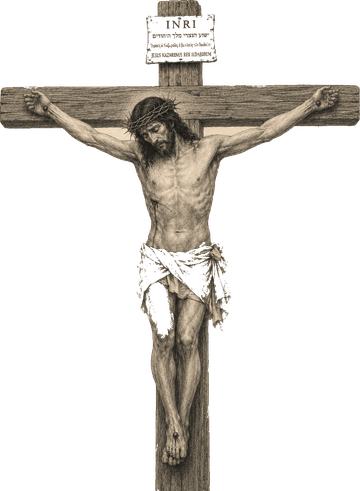
A blessed medal covered with the initials of Latin prayers against the devil, worn or placed in homes as a sign of the Cross's victory and of St. Benedict's protection.
Background
A sacramental of the Benedictine tradition. The form most used today is the Jubilee medal struck at Montecassino in 1880 for the fourteenth centenary of St. Benedict's birth. On the face St. Benedict holds the cross and the Rule; around it runs 'Eius in obitu nostro praesentia muniamur' — May we be strengthened by his presence in the hour of our death. On the reverse a cross bears the letters C S S M L / N D S M D for 'Crux sacra sit mihi lux, non draco sit mihi dux' (May the holy Cross be my light, may the dragon never be my guide), with C S P B in the angles for 'Crux Sancti Patris Benedicti', PAX above, and around the rim V R S N S M V — S M Q L I V B for 'Vade retro Satana, nunquam suade mihi vana; sunt mala quae libas, ipse venena bibas.' Wearing the medal is a private devotion; it works no magic and asks for faith and prayer.
How to practice
Ask a priest to bless the medal with the formula given for it in the Roman Ritual. Then wear it, or keep it in the home, in a car, or in the foundations of a building, as a plea for protection. Use it with an act of faith rather than as a charm: make the Sign of the Cross, renounce the devil and his works, and pray in the words the medal abbreviates — 'May the holy Cross be my light; may the dragon never be my guide' — and ask St. Benedict's intercession for a holy death.
Indulgences
- Citation
Enchiridion Indulgentiarum, 4th ed. (Apostolic Penitentiary, 1999), grant on the use of articles of devotion: a partial indulgence for the devout use of a crucifix, rosary, scapular or medal properly blessed by a priest. The governing norms are those of Paul VI, Indulgentiarum Doctrina (1967).